Deo Adjuvante, Non Timendum
“With God as My Helper, I Have Nothing to Fear”
August 3,2026
Nassau, The Bahamas
By Dr Kevin Turnquest Alcena
Defining Slaves and the Enslaved: Historical Context & Implications
The Heavy Weight of "Slave"
The term "slave" carries loads of history & pain, all wrapped up in centuries of human suffering. The word comes from the Latin "servus," meaning servant. Over time, it evolved in Greek, connecting to the fate of Slavic people captured & sold by Vikings to the Romans (Davis, 2006; Patterson, 1982).
Chattel Slavery: Ownership in its Worst Form
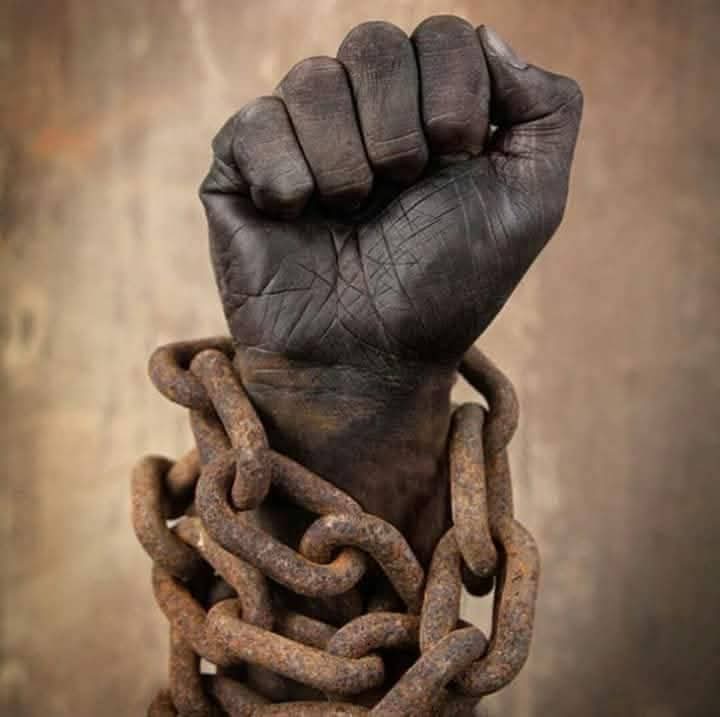
Chattel slavery stands out as one of the most dehumanizing forms. In this system, people were seen purely as property. Unlike pre-colonial African servitude involving prisoners-of-war, criminals & debt-bondage, the chattel slavery by Europeans was especially cruel (Lovejoy, 2000; Thornton, 1998).
In traditional African systems, the enslaved status often didn't extend to children. With chattel slavery, though, this generational enslavement became a harsh reality. It imposed unimaginable suffering on countless lives (Manning, 1990).
The Ugly Face of Chattel Slavery
Chattel slavery stripped People of personal rights and autonomy. They were treated just like objects—bought, sold, worked hard, punished & used as collateral. Owners saw them as mere things and could transfer them at death or whim (Kolchin, 1993). They couldn't marry or own property and were barred from voting or signing contracts. Worst of all? Their children were automatically enslaved too (Berlin, 1998; Davis, 2006).
Apprenticeships & Indentured Servitude
During the colonial period, apprenticeships & indentured servitude also existed. Though less brutal than chattel slavery, they were oppressive too. People were tied by contracts for years without pay and had little freedom during that time (Galenson, 1981).
Legacy & Modern Reflections
"The past is never dead. It's not even past," said William Faulkner. This reminds us how historical injustices still affect today's society. These echoes from history push us to remember compassion & equality and work toward a more humane world (Faulkner, 1951; Patterson, 1982).
Closing Thoughts
The journey through the history of slavery—from its roots to its brutal forms—shows a story full of human suffering & strength. Knowing this history helps us understand today’s social structures better and fosters a future based on respect for all.
References
Berlin, I. (1998). Many Thousands Gone: The First Two Centuries of Slavery in North America. Harvard University Press.
Davis, D. B. (2006). Inhuman Bondage: The Rise and Fall of Slavery the New World. Oxford University Press.
Faulkner, W. (1951). Requiem for a Nun. Random House.
Galenson, D. W. (1981). White Servitude in Colonial America: An Economic Analysis. Cambridge University Press.
Kolchin, P. (1993). American Slavery: 1619-1877. Hill and Wang.
Lovejoy, P. E. (2000). Transformations in Slavery: A History of Slavery in Africa. Cambridge University Press.
Manning, P. (1990). Slavery and African Life: Occidental, Oriental & African Slave Trades. Cambridge University Press.
Patterson, O. (1982). Slavery and Social Death: A Comparative Study. Harvard University Press.
Thornton J.K., (1998). Africa and Africans in the Making of the Atlantic World: 1400-1800., Cambridge University Press
Dr. Kevin Turnquest-Alcena Chairman of the Board of Governors
Rector, Michael University
LLB (Hon-1st Cl.), LLM (Hon-1st Cl.)
Ph.D. in Economics / Ph.D. in Clinical Psychology
MD/Ph.D. in Biogenetics
Ph.D. in Public Health / Ph.D. in Herbal and Holistic Medicine
Titular Professor
Lawyer & Fellow-FCILEX;
AClArb; & Snr. Fellow-AMLA
• Ph.D. in Pharmacy (Pharm D)
• Ph.D. in Public Health / Ph.D. in Herbal and Holistic Medicine
• Titular Professor, Lawyer & Fellow FCILEX, ACIArb, & Senior Fellow AMLA